How Our Trainers Prevent 90% of Gym Injuries — Practical, Safe Strength Training
Most gym injuries don’t happen by chance — they come from predictable causes. Our trainers cut risk by following four steady habits: a personalized movement assessment, strict exercise mechanics, conservative progressive overload, and smart warm-ups/cool‑downs plus recovery. This approach targets faulty movement patterns, muscle imbalances, and sudden jumps in load so you get stronger without setbacks. In this guide we explain what a science-backed movement assessment looks for, how coaches correct technique, how to progress load safely, and which warm-up and recovery habits protect joints and tissues. Each section includes hands-on routines, correction workflows, and simple monitoring tips so you can use the method in the gym or evaluate a trainer’s process. Key terms — movement assessment, progressive overload, corrective exercise, recovery — are tied to practical steps and the research behind them.
How Does Personalized Movement Assessment Reduce Gym Injury Risks?

A personalized movement assessment is a short, focused set of screens and tests that uncovers movement faults, mobility limits, and side‑to‑side strength differences so programming can address the real causes of injury. It checks range of motion, movement quality, single‑leg control, and basic strength; the results show which exercises are risky for a client and which corrective drills are needed. When assessments guide exercise choice, load progression, and regressions, training stress matches tissue capacity and injury risk drops. Coaches then turn those findings into a prioritized plan that removes risky patterns and adds corrective work before heavier loading.
Assessments go from general to specific, so coaches build programs from data — not guesswork. The sections below cover common validated tools and how trainers spot the imbalances and mobility limits that often lead to injury.
What Is a Science-Backed Movement Assessment?
A science-backed movement assessment uses validated screens — like a squat pattern check, single-leg balance tests, and joint range-of-motion measures — to quantify functional limits and injury risk. These tests examine biomechanics (alignment and compensations), mobility (ankle, hip, thoracic spine), and basic strength/endurance across key patterns, producing actionable observations for programming. Because the focus is movement quality rather than isolated raw strength, coaches can prioritize corrective exercises before reintroducing complex loaded lifts. These measures show which movements need regression, which need mobility work, and which can safely progress.
Those data-driven findings naturally lead to the next step: identifying specific muscle imbalances and mobility gaps to target.
How Do Trainers Identify Muscle Imbalances and Mobility Limitations?
Trainers spot imbalances with visual cues, side‑to‑side strength checks, and simple unilateral tests that reveal dominance, poor control, or reduced range on one side. For example, someone who overuses their quads may show a shallow hip hinge and forward knee travel during squats — signs the posterior chain (glutes and hamstrings) needs work. Follow-up checks — single‑leg deadlifts, glute‑bridge symmetry, and hip rotation measures — confirm the pattern and point to corrective priorities. Coaches then program targeted drills and retest on a planned cadence so progress is tracked and the work fits into the main program.
Turning assessment data into concrete corrective steps helps fix movement faults before heavy loading — which makes mastering exercise form the next essential pillar.
Why Is Mastering Proper Exercise Form Essential for Injury Prevention?
Good exercise form spreads load across muscles and joints correctly, preventing focal overload, compensation, and the chronic tissue stress behind many gym injuries. Proper technique aligns the skeleton to reduce shear and twisting forces, improves leverage for efficient force production, and maintains joint stability under load. Coaches teach form to limit damaging eccentric overload, protect structures like discs and ligaments, and let muscles strengthen safely. Technique also acts as an early warning: persistent breakdowns usually signal capacity limits or fatigue and indicate the need to adjust load.
How Do Personal Trainers Correct Common Exercise Technique Errors?
Trainers correct technique with clear cues, sensible regressions, and objective feedback — video or mirrors — to speed motor learning and rebuild patterns. They start with concise verbal cues, add tactile or external prompts when needed, and step back to simpler versions (for example, from a back squat to a box or goblet squat) until mechanics are restored. The priority is rep quality over weight — better to do fewer flawless reps than chase ego lifting that risks injury. Coaches also use tempo, occasional video review, and regular checks so corrections hold as load increases.
These correction methods tie directly into the session-level safety steps trainers use to reduce strains and acute injuries.
What Are Safe Workout Safety Techniques to Avoid Strains and Sprains?
Practical in-session safety steps include quick pre-session checks, bracing and breathing cues, and correct equipment setup to limit sudden joint stress and soft‑tissue strain. Coaches use cues like “brace the core, exhale on exertion,” set up pins or spotters for heavy lifts, and watch for fatigue that leads to form collapse. Session safeguards — planned warm-ups, incremental load increases, and enforced range limits when needed — reduce strain and protect vulnerable tissues. Consistently applying these habits creates dependable session hygiene that complements longer-term corrective programming.
When safe technique and session protocols are routine, progressive overload becomes sustainable — the next key component of injury-resistant training.
What Is the Role of Progressive Overload in Safe Strength Training?
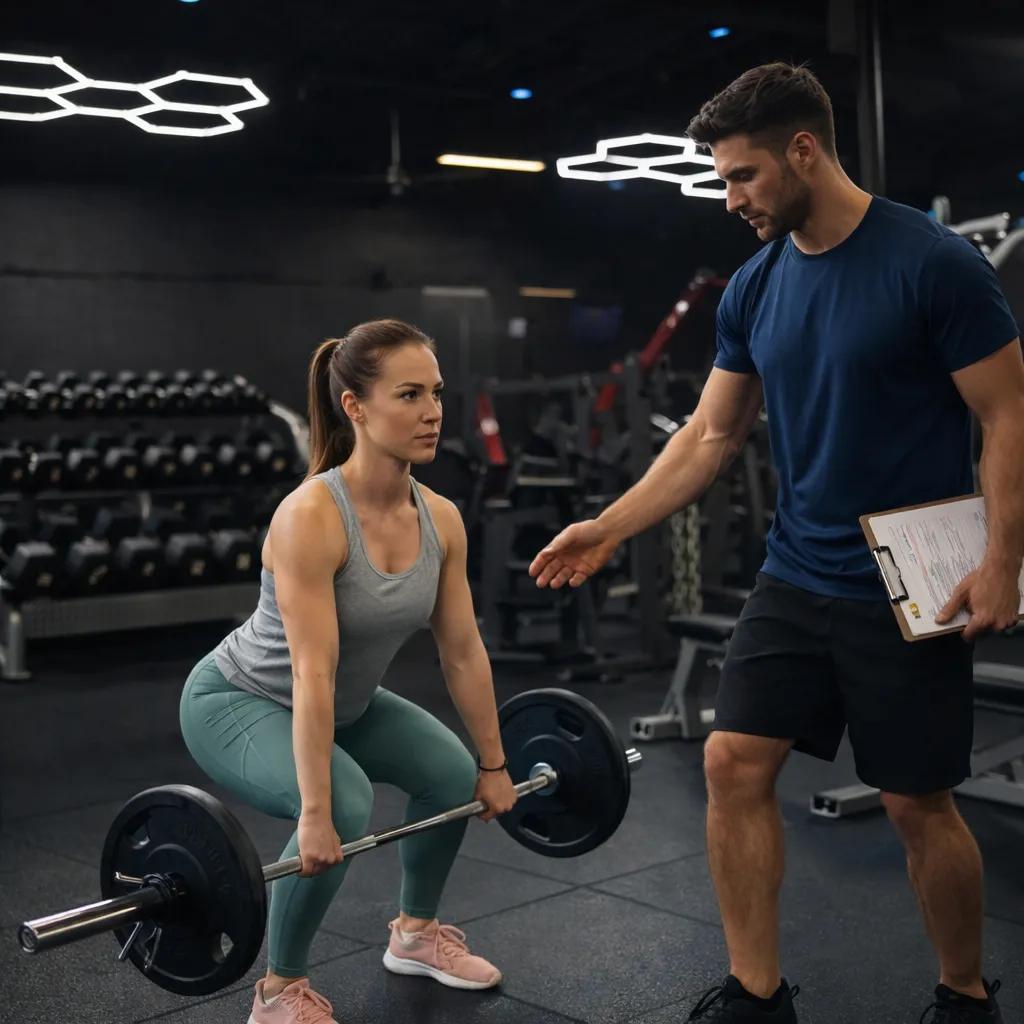
Progressive overload is the planned increase of training stress — by adding weight, volume, or frequency — so tissues adapt and get stronger. Done conservatively, it prevents overuse injuries by allowing gradual tissue remodeling. Incremental stress encourages muscle and connective‑tissue adaptation, while sudden jumps create accumulating microtrauma and higher injury risk. Safe progression combines small, measurable increases, auto‑regulation (listening to readiness), and scheduled deloads to manage cumulative stress. A balanced stimulus plus recovery lets trainers build capacity without triggering chronic overload or acute failure.
Below is a straightforward comparison of common progression strategies and safe rate-of-change examples to help pick the right approach.
| Approach | Characteristic | Recommended Rate |
|---|---|---|
| Load increase | Add weight while keeping reps constant | ≤ 5–10% per microcycle |
| Volume increase | Add sets or reps at same load | +1 set or +2 reps per week |
| Frequency increase | Add an extra session for specific lift | +1 session every 2–4 weeks |
| Intensity modulation (RPE) | Use perceived exertion to auto-regulate | Adjust by 0.5–1 RPE when needed |
These conservative adjustments let you progress while keeping tissue risk low. The following sections explain how pacing intensity prevents overtraining injuries and list safe strategies for building strength.
How Does Gradual Intensity Increase Prevent Overtraining Injuries?
Slow, planned increases in intensity give connective tissue and the nervous system time to adapt, reducing the microdamage that leads to tendon and muscle problems. Tendons and ligaments need longer recovery windows than muscle, so pacing intensity and tracking readiness — sleep, soreness, mood, session RPE — helps prevent chronic overload. Trainers use simple monitoring tools — session RPE, trend logs, and quick readiness checks — to spot overreaching early and schedule deloads before injuries appear. This pacing balances stimulus and recovery so progress is sustainable.
Monitoring intensity and recovery ties directly into the practical strength-building strategies below.
What Are Effective Strategies for Building Strength Safely?
Safe strength plans prioritize technical mastery, submaximal loading with high-quality reps, and periodization that alternates higher‑ and lower‑intensity phases. Practical models include linear or undulating periodization, focused technique blocks, and planned deload weeks; these limit continuous exposure to maximal loads. Coaches emphasize multi‑joint foundational lifts and balanced accessory work to avoid single‑muscle overload and correct assessment-identified asymmetries. Combined, these strategies deliver steady strength gains while minimizing acute or chronic injury risk.
When progressive overload is paired with regular technique checks and recovery measures, warm-ups and cool-downs become far more effective — the next major pillar in injury prevention.
How Do Warm-up, Cool-down, and Recovery Enhance Injury Prevention?
Warm-ups, cool-downs, and recovery habits prepare tissues for work, speed repair afterward, and lower cumulative injury risk by improving circulation, reducing stiffness, and supporting protein synthesis. Dynamic warm-ups raise muscle temperature and neuromuscular readiness, improving movement quality and lowering the chance of technique breakdown. Cool-downs and targeted stretching help reduce post‑exercise stiffness and calm the nervous system. Recovery habits — prioritizing sleep, nutrition, and planned active recovery — support tissue remodeling and prevent the chronic fatigue that often precedes injury.
The subsections below give specific warm-up and cool-down routines plus practical recovery actions you can do between sessions.
What Are Essential Warm-up and Cool-down Techniques?
A practical warm-up starts with light aerobic activation, moves through dynamic mobility and movement‑specific drills, and finishes with ramped sets of the main lift to prime the nervous system. Effective steps: 3–5 minutes light cardio, targeted mobility (ankle, hip, thoracic), movement prep (banded glute activations, lunges), then 1–3 ramp-up sets at reduced loads. Cool-downs are short and targeted — light movement, foam rolling, and 5–8 minutes of static stretching — to aid recovery. These steps smooth the transition into and out of high loads and reduce acute risk.
Warm-up and cool-down components with purpose and suggested durations:
| Component | Purpose | Recommended Duration/Intensity |
|---|---|---|
| Light aerobic | Increase blood flow and temperature | 3–5 minutes, low intensity |
| Dynamic mobility | Improve joint ROM for training patterns | 5–8 minutes, controlled tempo |
| Movement prep | Activate key muscles and motor patterns | 4–6 exercises, 2–3 sets each |
| Ramp sets | Neuromuscular priming for main lifts | 1–3 sets at 30–70% of work weight |
| Cool-down stretching | Reduce stiffness and aid recovery | 5–8 minutes static holds |
This structure keeps warm-ups and cool-downs purposeful and time-efficient, and it leads naturally into recovery strategies that support tissue repair.
How Does Recovery Support Muscle Repair and Injury Avoidance?
Recovery provides the building blocks (protein, sleep) and manages inflammation so muscles and connective tissues adapt to training rather than break down. Spreading protein through the day, getting quality sleep, and scheduling active recovery (light movement, mobility work) boost protein synthesis and nutrient delivery for remodeling. Planned deloads and monitoring for persistent soreness or stalled progress prevent chronic overload and lower the risk of tendon or overuse injuries. Simple daily habits plus scheduled recovery phases protect long‑term training capacity.
Recovery protocols close the training loop and also feed into corrective work for addressing imbalances, which we cover next.
How Are Muscle Imbalances Corrected to Prevent Common Gym Injuries?
Fixing muscle imbalances takes prioritized corrective drills, consistent frequency, and gradual reintegration into the main program so compensatory patterns don’t reappear under load. Trainers follow a clear workflow: assess and rank dysfunctions, choose corrective exercises (activation → strengthening → integration), prescribe short frequent sessions, and retest to track change. Corrective work rebalances force production and improves motor control so primary lifts can be loaded safely. The focus is on sustainable drills and measurable progress — not quick fixes.
Common imbalance patterns and corrective prescriptions:
| Imbalance Pattern | Corrective Focus | Frequency & Timeline |
|---|---|---|
| Quad dominance / weak glutes | Glute activation, Romanian deadlifts | 3×/week, 4–8 weeks |
| Hamstring tightness / limited hip hinge | Hip mobility + eccentric hamstring work | 3×/week, 4–6 weeks |
| Shoulder internal rotation | Posterior cuff and scapular control drills | 3×/week, 6–12 weeks |
| Core instability / lumbar strain | Anti-extension core work + technique integration | 3–4×/week, 6–8 weeks |
This lineup helps coaches prioritize corrective programming and set realistic timelines for restored balance. The following sections map common injuries to their typical imbalances and show how trainers build corrective microcycles.
Which Common Injuries Result from Muscle Imbalances?
Many common gym complaints trace back to predictable imbalance patterns: patellofemoral pain often follows quad dominance and poor hip control; low‑back pain commonly stems from a weak posterior chain and poor hinge mechanics; shoulder impingement frequently links to scapular instability and tight chest muscles. Recognizing these connections lets trainers prescribe targeted prevention — strengthen antagonists, restore mobility, and retrain patterns to offload stressed structures. Simple coaching cues, like reinforcing the hip hinge for back pain, translate directly into fewer flare-ups and safer progress.
Knowing which injuries map to which imbalances guides corrective program design.
How Do Trainers Design Corrective Exercise Programs?
Trainers design corrective programs by choosing drills that directly target the deficit, prescribing short frequent sessions (daily briefs or 3×/week), and increasing complexity as control improves. A typical 6–8 week microcycle starts with activation and motor control in weeks 1–2, moves to loaded strengthening in weeks 3–6, and reintegrates the corrected movement into compound lifts by weeks 6–8 with regular reassessment. Progress is measured with objective markers — single‑leg hold time, pain‑free range, or movement quality scores — to decide readiness for full reintegration. This measured approach helps corrections stick when progressive overload resumes.
Real-world success stories below show how assessment, cueing, progression, and recovery combine to deliver results.
What Success Stories Demonstrate the Effectiveness of Injury Prevention Methods?
Evidence for this method comes from anonymized client case examples and research showing supervised, assessment-driven training reduces injury rates and improves function. Case studies show clients who began with pain or limited movement regained full participation through assessment-led corrective work, form coaching, and conservative progression. Recent reviews and consensus papers from exercise-science groups also find that supervised strength training plus movement screening reduces certain acute and overuse injuries compared with unsupervised training. Tracking improvements — range of motion, strength gains, pain reduction — gives objective proof the method works in practice.
How Have Clients Achieved Injury-Free Fitness Transformations?
One anonymized example: a client in their mid‑40s with recurring knee pain completed a movement assessment that revealed weak hip abductors and quad dominance. The plan combined glute activation drills, eccentric hamstring work, and progressive squat regressions over eight weeks, resulting in pain‑free squatting and about a 20% improvement in depth and strength measures. Another client with shoulder discomfort restored scapular control and reduced symptoms after a focused six‑week corrective block and a slow return to pressing. These stories show how assessment → corrective work → careful progression leads to measurable, injury‑free gains.
Those practical wins align with the research on supervised training outcomes.
What Scientific Evidence Supports Personal Training for Injury Prevention?
Recent studies and professional guidelines indicate that supervised strength training combined with movement screening and coach‑led progression reduces injury risk by improving movement quality, strength symmetry, and joint stability. Systematic reviews show programs including neuromuscular training, progressive loading, and targeted corrective exercises lower the incidence of certain overuse injuries and boost functional performance. Practically, this means supervised sessions are especially valuable for higher‑risk groups — older adults or people returning from injury — and that objective reassessment should guide load increases. Taken together, the evidence supports this method when applied consistently.
Results Transformation Center (ResultsTC) uses these same principles across our West Sacramento, Sparks, and Rancho Cordova locations. Our trainers run structured assessments, prescribe corrective progressions, and monitor overload so clients stay safe while making measurable progress.
- Assessment-Driven Coaching: Objective movement screens identify risks before programming.
- Form-First Progression: Technique comes before load to prevent compensatory injuries.
- Planned Recovery: Scheduled deloads and recovery habits reduce chronic tissue stress and support long-term training.
Those core practices form a repeatable method our trainers use to prevent most common gym injuries while helping clients get stronger and healthier.
Frequently Asked Questions
What are the signs that I might need a movement assessment?
If you get recurring pain during workouts, struggle with specific exercises, or notice one side is noticeably weaker or stiffer, a movement assessment is a smart next step. Other red flags: a history of injuries, balance or coordination issues, or a long break from training. An assessment pinpoints movement faults so your program can be safer and more effective.
How often should I undergo a movement assessment?
It depends on your goals and training load, but a good rule is every 6–12 months — or anytime your routine or physical condition changes significantly. Regular check‑ins track progress, catch new imbalances early, and keep your program aligned with current capacity.
Can I perform strength training without a personal trainer?
Yes — many people train safely on their own — but a trainer speeds progress and reduces risk. A coach provides personalized guidance, corrects form, and builds a program around your needs. If you train solo, start light, focus on technique, and consider an initial assessment to uncover hidden risks.
What should I do if I feel pain during a workout?
Stop the movement and assess. Pushing through sharp or worsening pain can make things worse. Get an evaluation from a healthcare professional or a qualified trainer to identify the cause — improper form, imbalance, or an injury — and follow their guidance on corrective steps and a safe return to training.
How can I ensure my recovery strategies are effective?
Prioritize sleep, hydration, and balanced nutrition, and include active recovery like light mobility work or walking between sessions. Track soreness, sleep quality, and training performance to fine‑tune recovery. Simple tools — foam rolling, targeted stretching, and planned deloads — help you bounce back and train consistently.
What role does nutrition play in injury prevention?
Nutrition supplies the materials your body needs to repair and adapt. Adequate protein supports muscle synthesis, carbohydrates restore energy, and proper hydration helps joint function. A nutrient‑rich diet also helps manage inflammation and supports tissue health — key factors in reducing injury risk.
Conclusion
Safe strength training — built on individualized assessment, solid technique, sensible progression, and planned recovery — significantly reduces gym‑injury risk and keeps progress steady. When trainers apply this method consistently, clients get stronger, move better, and stay in the game longer. If you want an evidence‑informed, guided path to safer strength, our ResultsTC team can design a plan that fits your goals and protects your body every step of the way.
At Results Transformation Center, you’ll find a supportive community of people balancing work, family, and the pursuit of better health. Join us and take practical steps to feel and move better every day.
Why our members love us:
✅ Classes for every age and fitness level.
✅ A supportive, judgment‑free environment.
✅ Flexible scheduling that fits busy lives.
Unlock your FREE 3‑Day VIP Pass during your first month or visit us at https://resultstc.com/
👉Call us now at (916) 371-2496 to get started on a stronger, healthier you. Don’t miss this opportunity!